


Following the software failure of Henen-nesw’s Xeon Phi 3120A due to rotten drivers, I turned my attention to older hardware as I often do when recent equipment leaves a sour taste in my mouth. The result? An ambitious late ‘90s build that will serve as an oasis of operating system development initiatives. I named it Itjtawy (pronounced /IT-yuh-tahwey/), after the lost disembedded capital of the Middle Kingdom’s greatest dynasty.
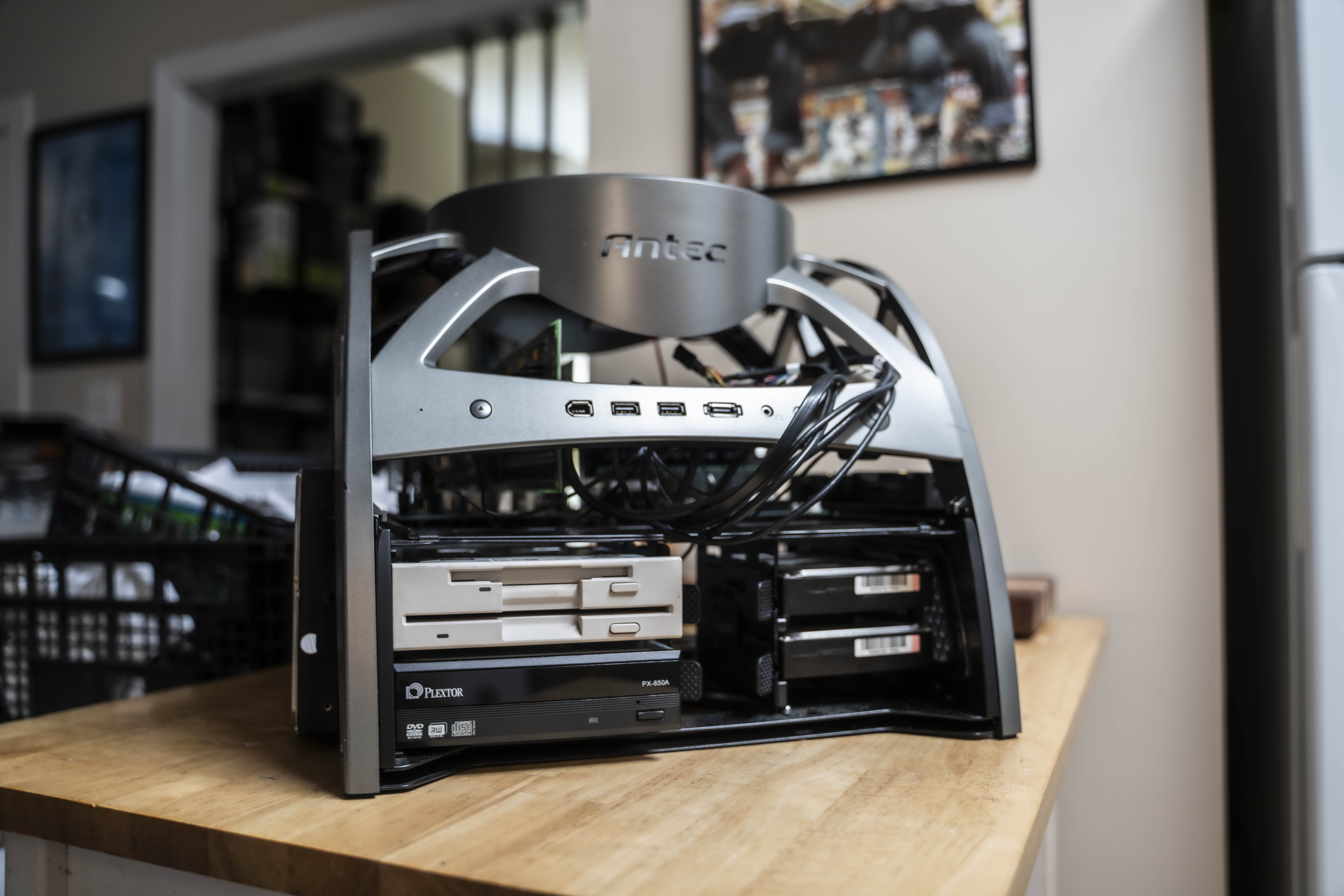
This is what the build looks like at a glance, with all of its components present as I wait for the remaining cables to trickle in from schmeBay. It is built into this ‘hot plate PC case’ from Antec that I must say has been an absolute joy working with, which surprised me considering its unorthodox design.
Now that all the parts are in, I can say absolutely none of those front ports you see will be functional in any way. That said, the power and reset switches will both be fully functional, and their LEDs will work swimmingly too. And yes, that is a 5¼″ and 3½″ combo floppy drive. It might be my favourite part of the build.
The plan is to run four operating systems on this machine (the maximum possible with MBR bootloading):
Windows 2000 Professional with the unofficial patched kernel
Windows NT 3.1 for universal compilation targeting of 32-bit NT
Windows 95 for universal compilation targeting of 32-bit DOS-based Windows
MS-DOS 6.22 with Windows 3.11 for targeting 16-bit real mode and Win16 applications, respectively
I am also considering swapping out MS-DOS + Windows 3.11 for Debian 7 so I can run somewhat recent Linux on it as well, since I read somewhere that’s the last Debian to support legacy Nvidia drivers for cards like my FX 500. I have another (much more archaic) i486 build that is supposed to run that combination anyway and will be taking NT 3.51 and NT 4.0 as well (absent here).
The boot drive holding all of these will be an 8GB UDMA 7 capable CF card (in UDMA 6) running on the primary master IDE, while the very nice Plextor DVD writer will be on the secondary master IDE.
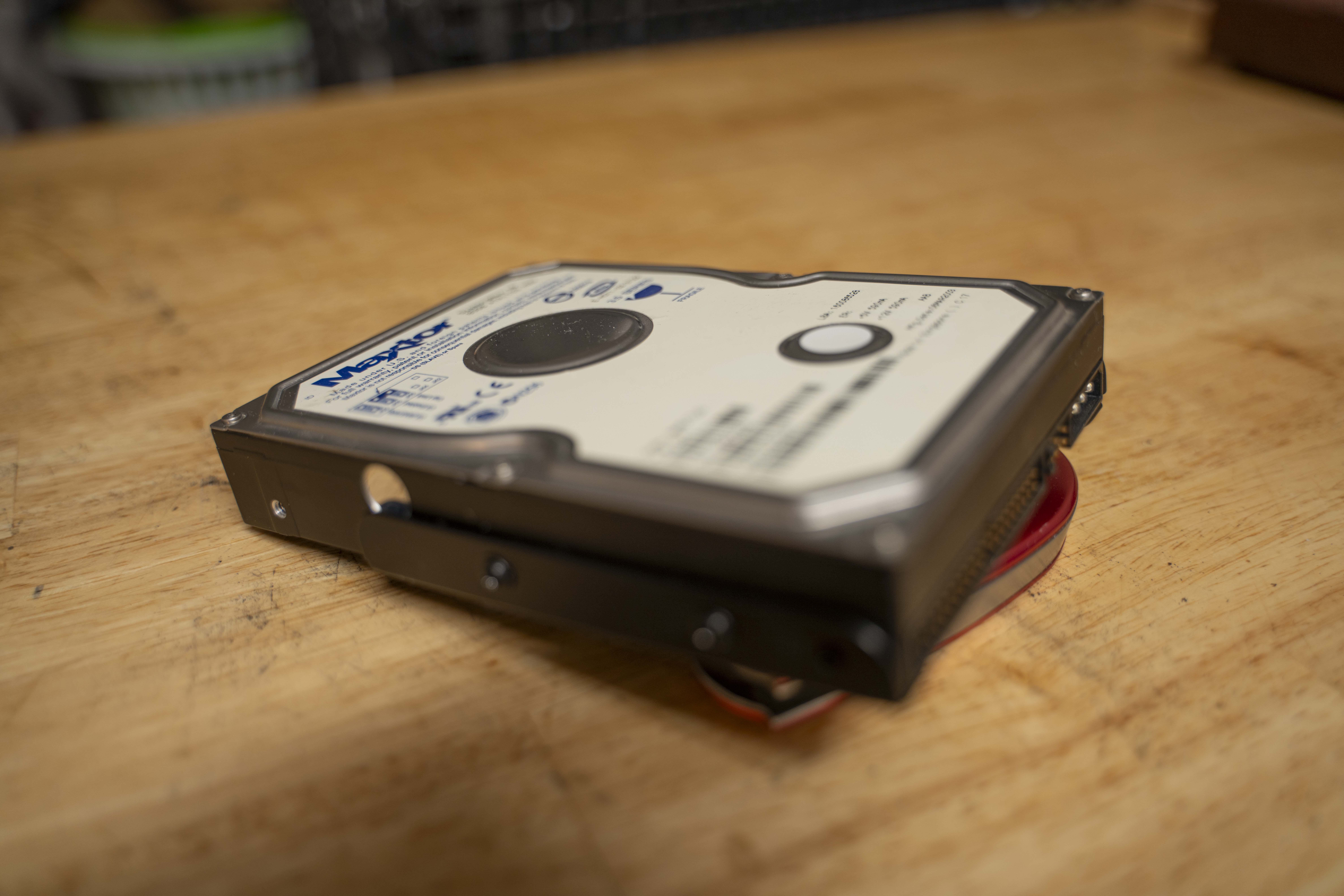
These are the build’s mass storage drives: six (6) count 80GB Maxtor IDE hard disk drives that were open-box when I bought them as a lot on schmeBay. They present an opportunity for me to experiment with designing my own software JBOD and eventually software RAID solutions – something that fascinates me as software RAID is the norm today but was not at all twenty years ago when these parts were contemporary.

This is the supplementary IDE card (also from Maxtor 💛) which takes four of the six hard disk drives. The other two will occupy the primary slave and secondary slave positions on the motherboard’s IDE cables that run to the boot drive and the DVD writer.
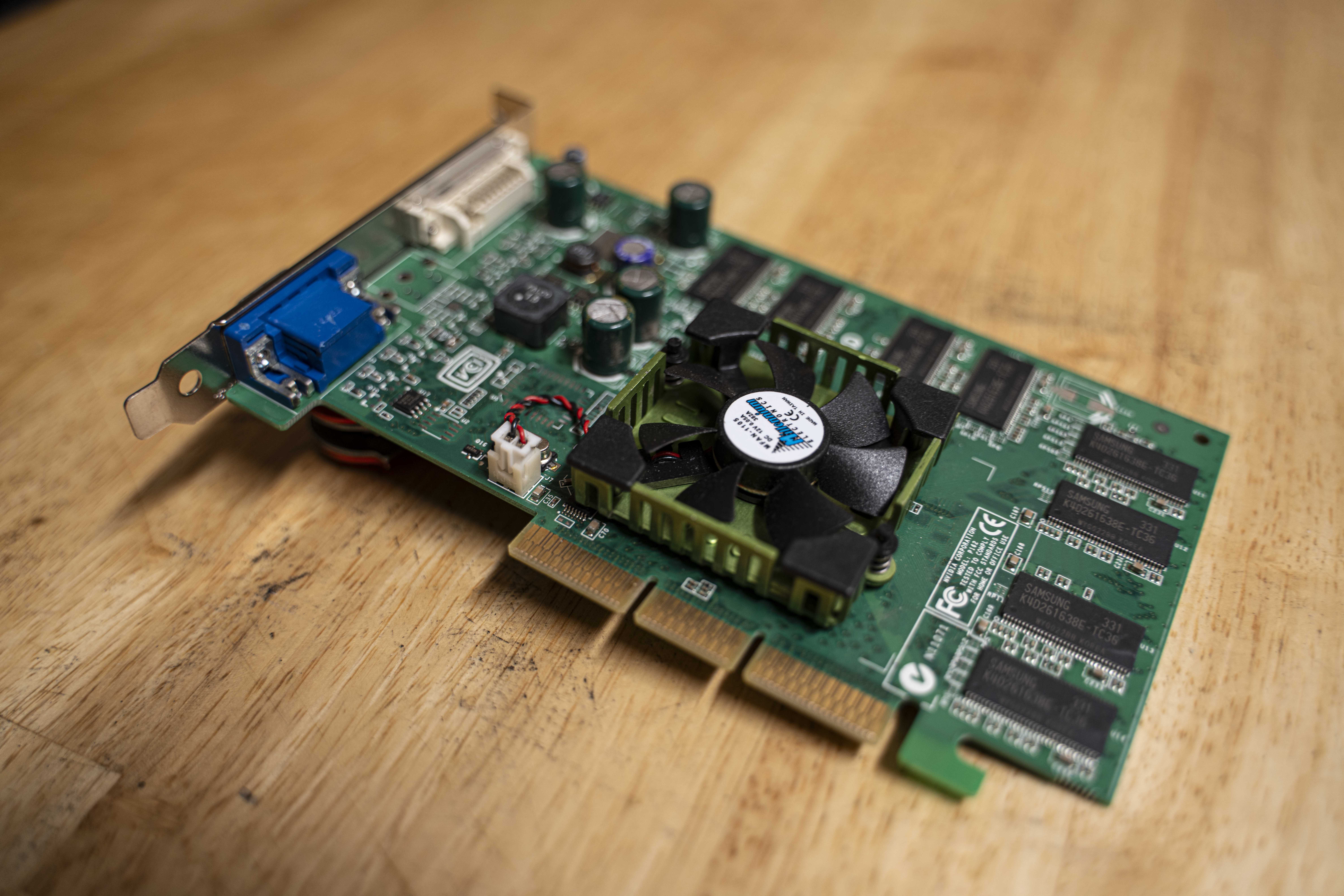
This is my primary graphics card: an Nvidia Quadro FX 500. It sports 128MiB of DDR SDRAM for VRAM and a core that is fully certified for OpenGL 1.5 and partially certified for OpenGL 2.1. I bought it as a baseline for immediate-mode-style GL programming that is more era-correct than the other, more anachronistic GL 1.x chips I have (namely the GMA 3150 on Jericho).
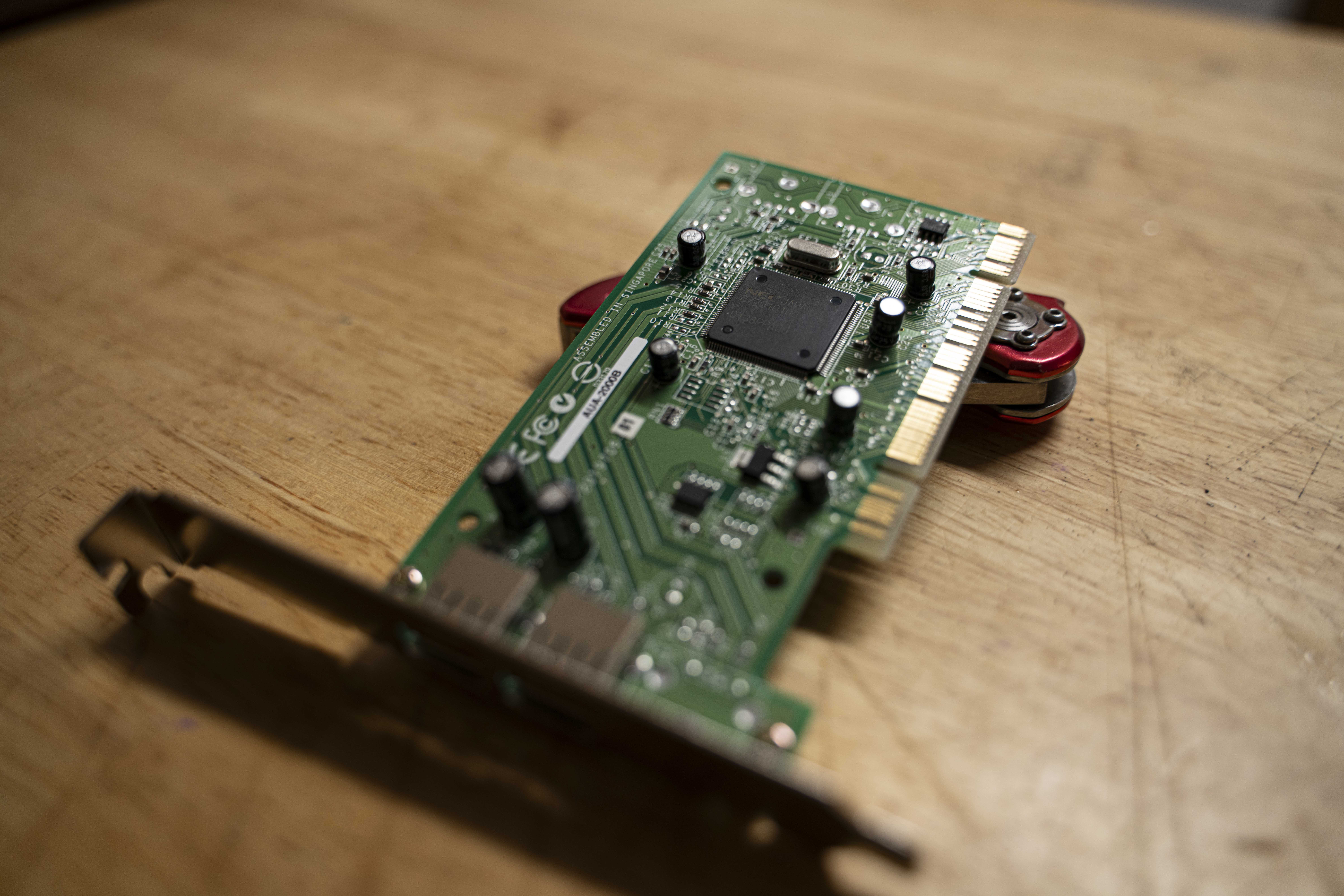
This is a USB 2.0 PCI card. It provides the fastest data transfer ports that are realistically ever going to function on this computer, and unfortunately lacks any USB 2.0 panel headers (I looked everywhere and couldn’t find any PCI cards that did). The motherboard has two USB ports, but they are almost certainly 1.1 at best (slooooow!).
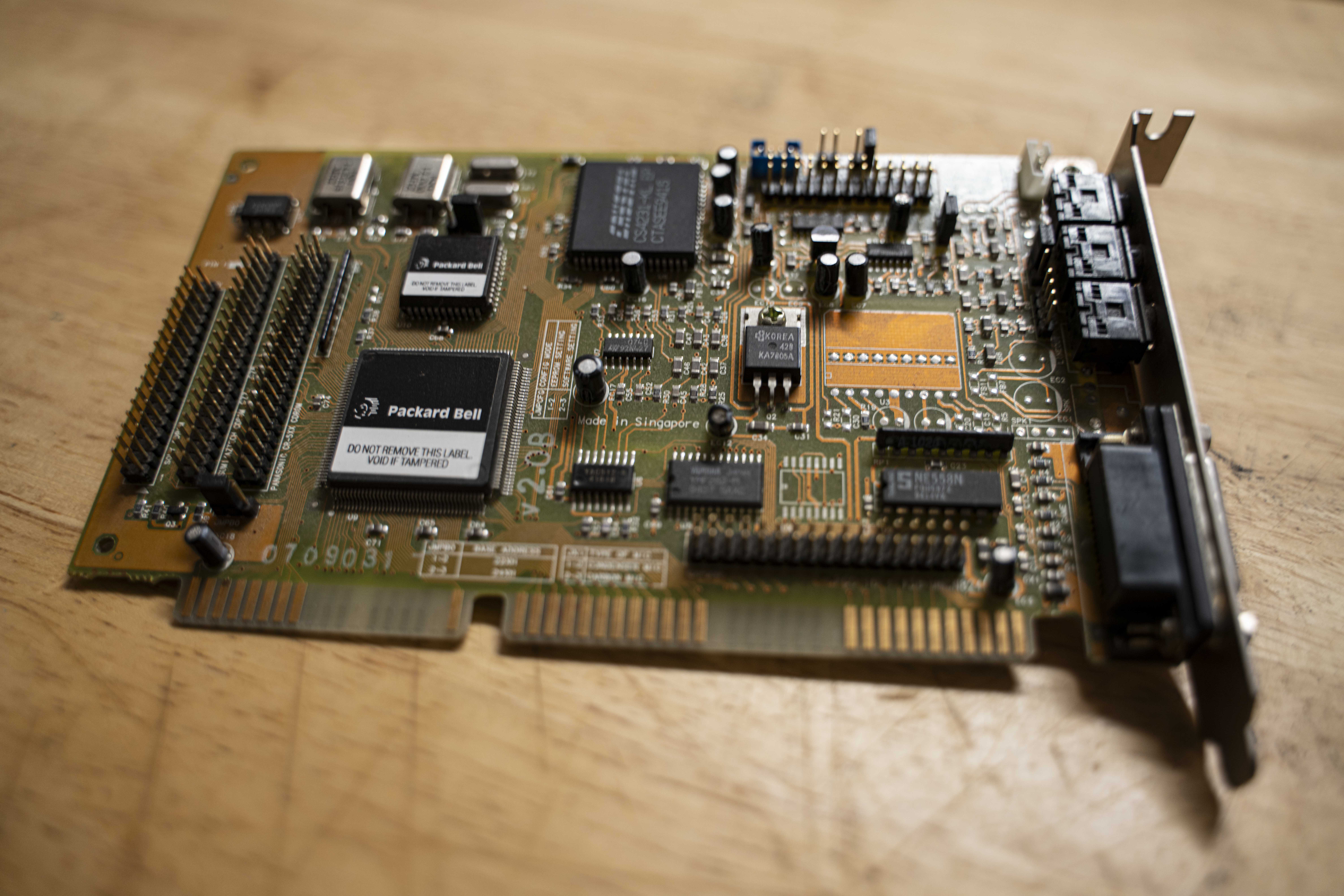
This is my system’s sound card. I bought it because I correctly anticipated my PCI port complement would be completely filled and didn’t want to risk slowing down the other high speed cards with something low bandwidth like a sound card. Like with the USB card, no modern case headers of any kind can be found on this, but at least it provides the usual complement of ⅛″ jacks on the back.
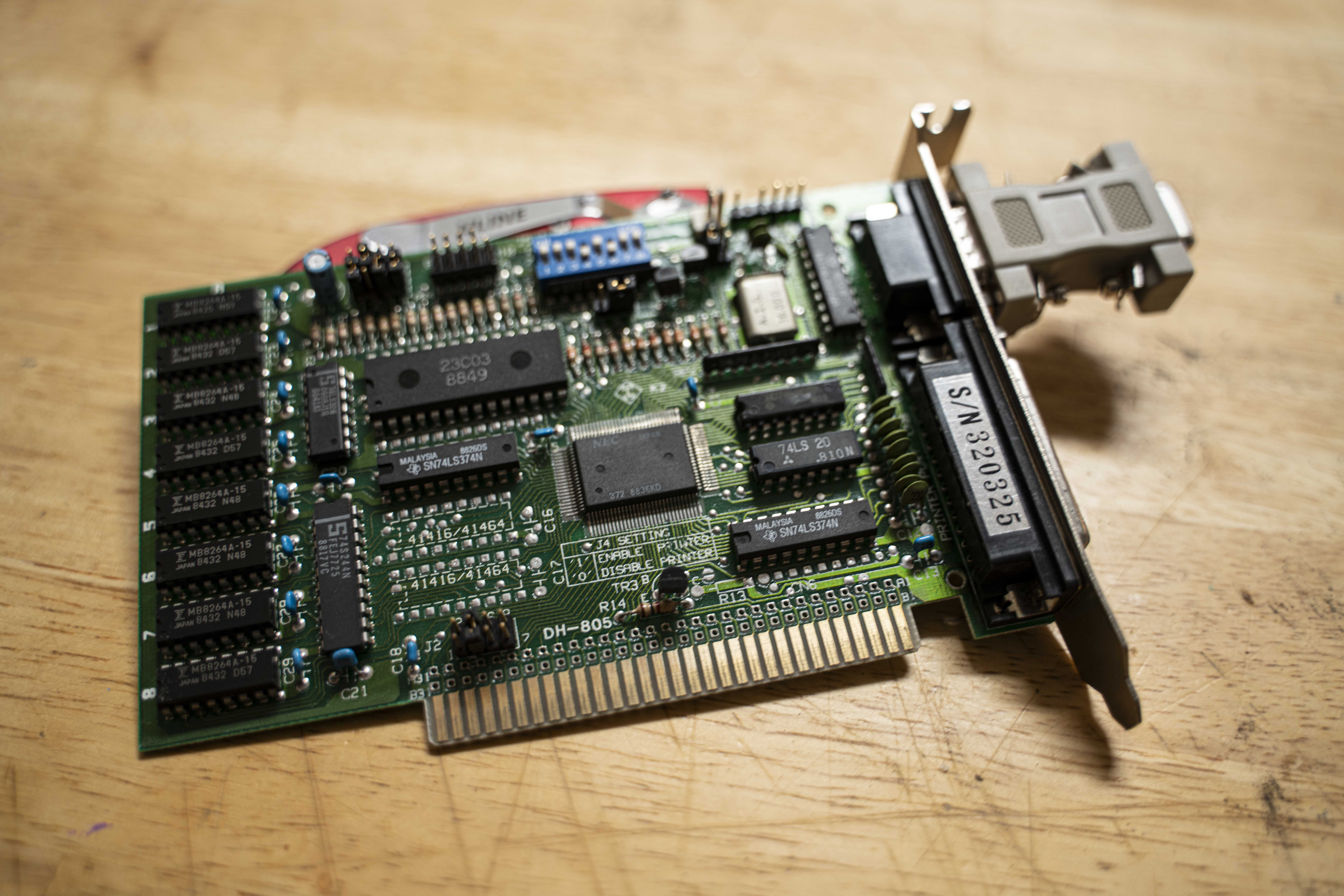
This fills in my other free ISA slot: an 8-bit ISA card (ergo, a PC card) that does CGA graphics. Stuck on the 9-pin port is a passive DB-9 to DB-15 connector so it can pipe to VGA monitors. This can be helpful when testing out Sirius DOS’s Subprime ABI for example, since it only uses text modes.
Finally, the pièce de résistance of the build: the Oxygen 402 from 3Dlabs.


3Dlabs was a trailblazer in the nascent industry of 3D graphics: in a world of SGI workstations and so-called Windows accelerators, they were the first to make CAD workflows practical on IBM-PC compatibles with the Oxygen series video cards, of which this 402 was their highest end model. They created the GLINT 300SX, which was the industry’s first single chip, 3D-capable graphics device that went to market. They also were a huge influence on OpenGL 2.0 as a member of its Architecture Review Board, and made huge strides filling in the budget end of the 3D graphics market with their Permedia brand. In short, 3Dlabs walked so that 3dfx, ATi and Nvidia could run.
Why do I have this card? Well, for the same reason I have everything else here: programming research. This card does original OpenGL in a way that is unlike any other card of its era, sporting four processing chips in parallel with a monstrous 32MiB of VRAM in total. I want my software to get stable framerates on this—within its feature capabilities of course—just as it should on the FX 500, Jericho’s Intel GMA, and any modern graphics chip you could think of.

This is what the cards look like installed. The Oxygen 402 is absolutely massive and barely fits in the case (though it does fit).
To accommodate the CPU’s power draw on my modern PSU’s 5V rail, I have acquired a PCIe-to-Molex breakout board that properly provides the 5V as well as 12V, converted on-board. That means all of the hard drives, the DVD writer and the combo floppy drive will draw from the PSU’s 12V rail, virtually eliminating the risk of overloading its 5V rail.
I’m excited to run this build, but I have to wait for the rounded IDE cables (which are thankfully UDMA capable), the rounded floppy cable and its card edge adapter, and some Molex adapters for those Shenzhen breakout boards to power it all. That big fan up top takes Molex too, which means there is not a single SATA power cable in sight. Very slick stuff.
All of these photos were taken with a Sony α7R IV camera with automatic exposure and manual focus and touched up in Adobe Photoshop CS2’s Camera Raw on Windows XP x64 Edition.